Ranga B · 9 September 2026
Same Bhagavān, many Sampradāyas
The debate on ontological primary, rasas, and where divya gyaan truly leads
Share
This article
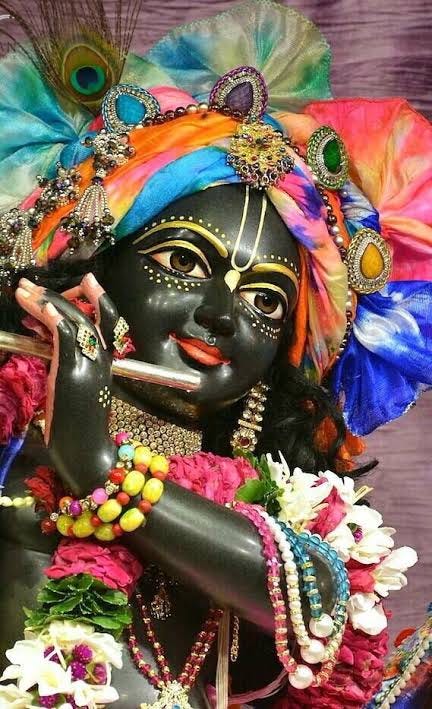
Who is the original?
The beautiful explanation by gaudiya vaishnava sampradaya is:
ete cāṁśa-kalāḥ puṁsaḥ kṛṣṇas tu bhagavān svayam (Srimad Bhagavatam, 1.3.28)
Kṛṣṇa is Bhagavān Himself (svayam), while Nārāyaṇa forms and the avataras are all expansions of Kṛṣṇa. These are portions or portions of portions, but Kṛṣṇa is Bhagavān Himself.
The shastra pramana is Srimad Bhagavatam, also Brahma Samhita quoted
Brahmā praises Kṛṣṇa as the Supreme Personality of God,
Ishwara paramah Krishna sat cid anandha vigraha,
anadir adir govinda sarva karana karanam
Plus the emphasis is on madhurya rasa being above all
Kṛṣṇa’s mādhurya rasa especially Vraja-līlā —is the fullest revelation of Bhagavān, because it manifests an intimacy unavailable in Vaikuṇṭha.
This explanation is correct and yet, in my view, somewhat partial/limiting.
Here in this article i try to present a detailed counter explanation. May Shri Krishna himself guide me towards the presentation, as my goal is not literature, but bhagavata unity as a higher purpose
Ontological Primary
Many Vaiṣṇava sampradāyas, including Shrī Vaiṣṇava and Mādhva, agree that Shrī Kṛṣṇa is Bhagavān Himself (svayam). There is absolutely no doubt about it and they express deep love for Shri Krishna. The question is what svayam establishes.
Svayam explains Kṛṣṇa as Bhagavān in His fullness; however, why assume that svayaṁ also establishes an ontological primacy over Śrī Nārāyaṇa or even that Sri Narayana is different? , That further extrapolation is not explicitly stated in the verse itself..
For many devotees, Śrī Kṛṣṇa and Śrīman Nārāyaṇa are non-different. While appreciating Nārāyaṇa as the Supreme Lord, their explanations delightfully state Kṛṣṇa as svayam Bhagavān, complete with all divine qualities.
A difference in manifestation and līlā. Does not establish a difference in ontological primacy. And since it is the same Bhagavān, is a sequence of ontological primacy really even necessary?
Clarification: I offer my sincere obeisances to the Gaudiya Vaishnava sampradaya and all its exalted acharyas, directly connected to Shri Chaitanya Mahaprabhu, Shri Krishna Himself. Their bhakti, prema, and intimate relationship with Krishna are unparalleled, and we aspire to follow in their footsteps toward Krishna-prema—the perfection of life. With full respect for all Vaishnava siddhanta, it is that same Shri Krishna who inspires me to share this broader point: “Let us unite around the same Bhagavan.”
Narayana, Narayana…(chants Sri Narada)
Narad muni who is most revered always chants “Naryana Narayana”
Nara = all living, Ayan = refuge.. Narayana (same as krishna) means one who is the final refuge to all living beings. The emphasis is on Bhagavān as the ultimate refuge/abode for all being. which rules out any other ontological primary, there the only beautiful explanation will be “Is really the same (as Krishna)”
Narayana = Krishna .
Same Bhagavan. Same Sri Krishna. undoubtedly
In another example, Prahlad Maharaj sings delightfully about Sri Narayana..
Kulandharum selvam thandhidum, Adiyaar paduththuyir aayiram ellaam
Nilandharam seyyum nezhvi sembarulum, Arulodu perunilam alikkum
Valandharum matrum thandhidum, Petra thaayum aayum seyyum
Nalam tharum sollai naan kandu konden
Naarayanaa ennum naamam !
This grants noble lineage, immeasurable true wealth; Removes countless sufferings and afflictions of devotees; This sustains all beings in earth and with pure auspicious grace; With grace also bestows vaikunta; Grants spiritual growth and even more benefits, nourishes us with mother-like care, giving all transcendental auspicious wellbeing,
I have found the transcendental word of all blessing: It is the holyname ‘Narayana, so states Prahlad mahraj
Since Nārāyaṇa is the ultimate refuge and Kṛṣṇa is that same Bhagavān in definition, why must one be ontologically prior to the other?
Govinda, Govinda…
Govinda is a beloved name of Kṛṣṇa, in Vraja.
Also refers to Shri Balaji at Tirumala, as devotees lovingly call Śrī Veṅkaṭeśvara—Śrīman Nārāyaṇa—“Govinda! Govinda!”
This beautiful holy-name belongs to many manifestations of bhagavan.
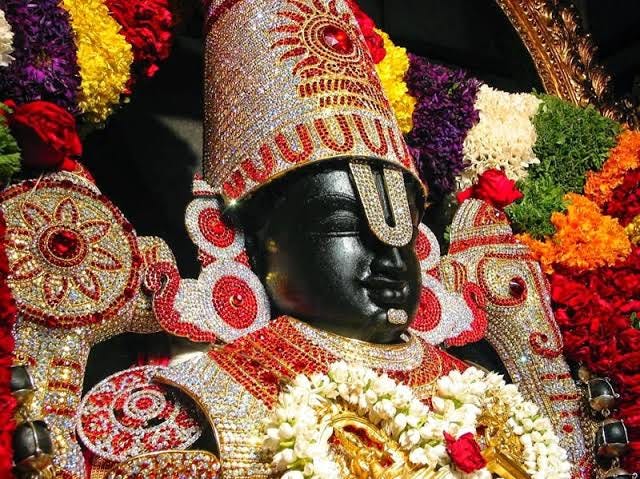
To understand lets hear what Govinda means
Govinda, protector of the cows, all devotees
Govinda — One who is known as ultimate truth of all vedas
Go as the senses — one who gives transcendental delight and guidance to senses
Go as the earth — protector and sustainer of the earth
Again, this beautifully illustrates the same Bhagavān revealing Himself through different forms, holy names and līlās. Having different loving names the devotees call him so
Rasa Hierarchy needed?
The Gauḍīya vaishnava explanation begins by placing śānta, dāsya, sakhya, vātsalya, and mādhurya rasa in a hierarchy, with mādhurya as highest. But is this hierarchy itself established and even more is it needed?
A rasa happens when Bhagavān graciously reveals in a relation with devotee —not necessarily is it a scale of God’s fullness.
Rasa asks: How does Bhagavān relate to His devotee?
Ontology asks: Who is Bhagavān?
These are related questions, but they are not automatically the same.
Is Hanumān’s dāsya to Śrī Rāma really lesser because it is not mādhurya?
Is purest devotee shabari mata, who tasted the sweet strawberrys and fed ram, not experiencing that closeness with the lord?
Is Shri Narasiṃha’s vatsalya bhava to prahlad less complete because it is not Vraja-mādhurya? Certainly not.
If every rasa is a perfect expression of transcendental relation, then ranking the rasas cannot by itself establish that one form of Bhagavān is ontologically primary/higher than another.
Rasa to Avatāra: Many-to-One
The challenge begins when we turn Bhagavān’s līlās into a fixed hierarchy of rasa. Bhagavān is infinite and acintya; our categories cannot contain Him.
We should distinguish between
what Bhagavān is capable of—infinite relationships and rasas—and what a particular avatāra chooses to reveal in a particular līlā.
illustrated Avataras<>Rasas
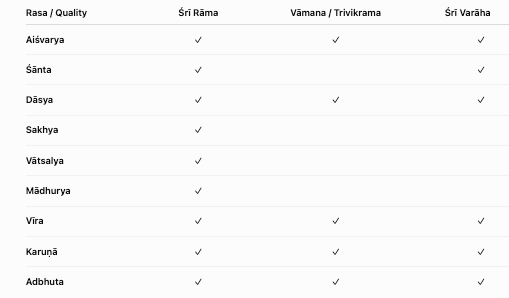
Small explanations; Sri Varaha was in loving relationship with Bhoodevi (mother earth), who he came to protect. Shri Ram-Sita loving relationship, also exemplary
Lets understand the difference between Fullness vs. intentional Manifestation;
Bhagavan’s form may exemplify few qualities/rasas, while concealing other quality without actually lacking that quality. Rāma’s līlā emphasizes maryādā. Narasiṃha emphasizes protection. Vraja-Kṛṣṇa emphasizes mādhurya.What Bhagavān chooses to reveal is not necessarily the limit of what Bhagavān is.
Vraja reveals an extraordinary depth of mādhurya rasa, but that does not automatically make other manifestations of Bhagavān ontologically later.
What about, Shri Narasiṃha
Śrī Narasiṃha is not merely showing aisvarya, ugra bhava
With Prahlāda there is profound parental affection-vātsalya bhava;
with Śrī Lakṣmī, intimate loving relationship—as Mālōla Narasiṃha, Lakṣmī embraces Him closely.
And in the experience of Swāmī Vedānta Deśika, Narasiṃha is even delightfully playing on the Vegavatī river bank: Thats vraja passtime shown
śrutīnām uttaraṃ bhāgaṃ vegavatyāś ca dakṣiṇam
kāmād adhivasan jīyāt kaścid adbhuta-kesarī
He is simultaneously saumya and raudra, karuṇa and ugra. Likewise, Śrī Rāma reveals dāsya, sakhya, vātsalya, pure love and śaraṇāgati.
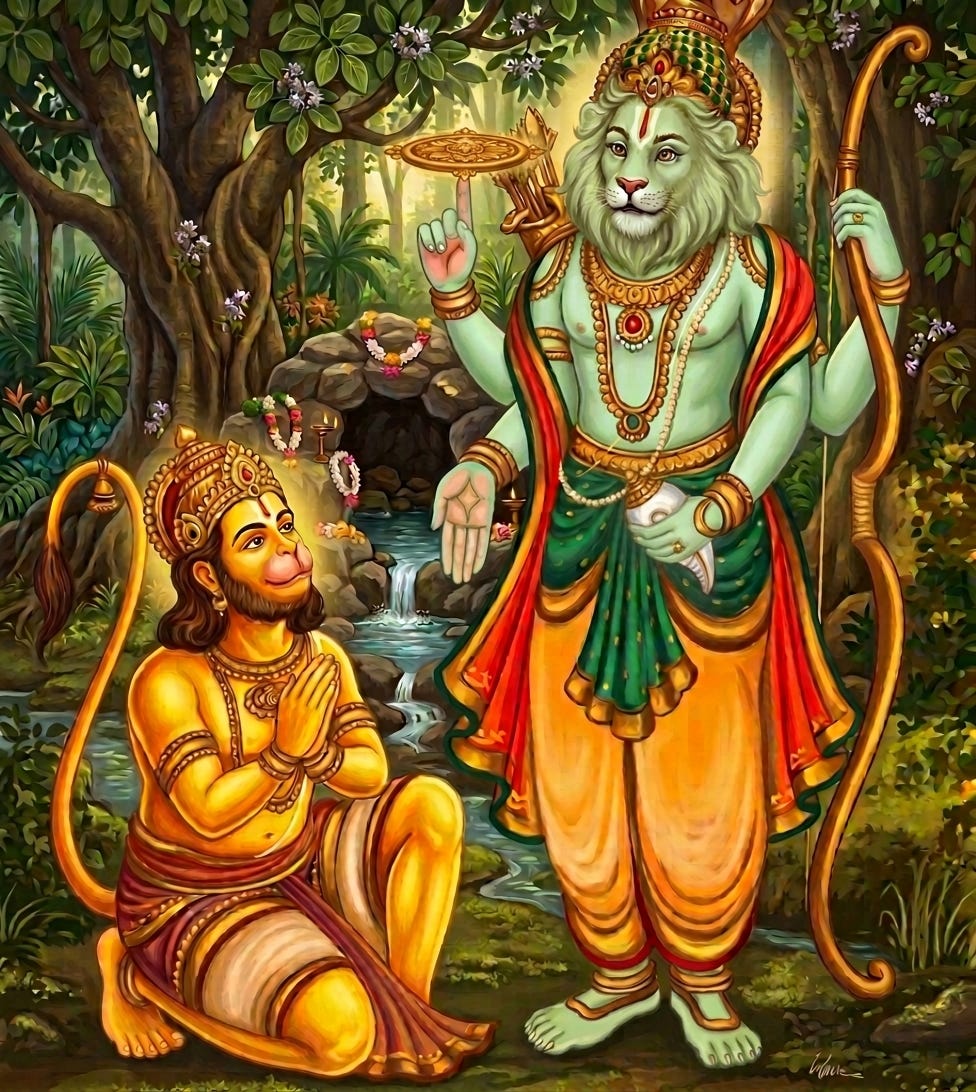
As Karanja Narasiṃha, Bhagavān showed himself in the form of Śrī Rāma for Hanumān ji. It is the mercy of the same Bhagavān to reveal his different forms simultaneously according to the devotee's relationship. Yet there is no ontological primacy needed here
Let us also consider this:
To the Āḻvārs, Śrī Narasiṃha is Azhagiya Singar—the Most Beautiful Lion—and Nammudaiya Nam Perumāl, the Dearest Dear Lord.
Why is Sri Narasiṃha so beautiful?
Even more beautiful per Alvars than Shri Sundara Rama
Because Sri Narasimha came immediately. He came for only one devotee.
How amazing is that?
Furthermore

Śrī Nṛsiṁha as Mālōla is especially beautiful when understood through rasa. Mālōla is commonly explained as “Mā + Lola” — He who is dear to Mā (Lakṣmī), or lovingly attracted to Lakṣmī.
Please focus on the most beautiful form of Malola (Lakshmi Narasimha),
Mata Sri Laksmiji is sitting on his lap, closely embracing him
Here ugra becomes→ śānta → vātsalya → mādhurya. His supreme power-aisvarya transforms to compassion, tenderness, and intimate prema.
Its always “Hare krishna”. Same as Radha Krishna
Same as Sri Malola,
Same as Sri Lakshmi Narasimha
Sri Lakṣmī is the compassionate puruṣakāra, approaching Bhagavān on behalf of the jīvas. Thus Mālōla reveals the inseparability of Śrī and Bhagavān—the aisvarya Lord becoming the beloved and compassionate Lord in the presence of Śrī.
This form is especially central to the Ahobila Maṭha tradition, where Mālōla Nṛsiṁha’s presence has been carried by the Jeeyars through the generations.
Mādhurya: With divine Concealment
In Vraja, Bhagavān conceals His aiśvarya through yoga-māyā, so the Vrajavāsīs love Kṛṣṇa as their child, friend and beloved. This is indeed profound beauty and love: the Supreme Lord allows His devotees to forget His supremacy so completely that pure loving intimacy becomes possible.
Bhagavān may conceal His aiśvarya in līlā;
However concealment reveals His mercy and kindness, not necessarily ontological priority.
Śrī Vaiṣṇavas explain with an important counterpoint.
Āṇḍāḷ addresses Nārāyaṇa Himself as her beloved, with intense longing for union, while never making His supremacy disappear. Andal infact means “Ruled over the lord himself”
The Āḻvārs likewise express intimate love, longing and surrender toward Nārāyaṇa as the Supreme Lord. For Rāmānuja, the soul’s śeṣatva—belonging wholly to Bhagavān—is not an obstacle to intimacy; it is the very basis of the soul’s eternal relationship with Him.
So the shift “less visible aiśvarya → greater mādhurya → ontologically primary Bhagavān” still needs an additional premise.
Simultaneousness
The story of my father who is a pious devotee and is doing exceptional krishna seva
He is simultaneously
A Chartered accountant at his work prior
My father, a loving parent
teacher to many students, in his social endeavours
Is a good samaritan, who did social service to poor
Healthy eater, offers prasadam daily
Brother for 8 siblings
Walked with gandhiji in pre-independant days
He is the same person different relationships.
Then extrapolate this to bhagavan, “All father” of all beings.
Śrī Kṛṣṇa and Śrī Nārāyaṇa: same Bhagavān, different manifestations, different names.
Reflection
“Vraja reveals a beautiful intimacy”
shifting to “ madhurya bhava is the highest“
shifting to “therefore Kṛṣṇa is ontologically prior to Nārāyaṇa”
This is not a self-evident sequence.
It requires the additional premise that rasa hierarchy is ontological hierarchy. That premise itself isn’t well concluded.
If Bhagavān can reveal countless relationships through many avatāras, why must the richness of one līlā establish an ontological sequence among His forms?
Perhaps the deeper conclusion is not “which form is higher?”, but simply:
It is the same wonderful Bhagavān.
Śrī Kṛṣṇa Govinda Hare Murāre
He Nātha Nārāyaṇa Vāsudeva
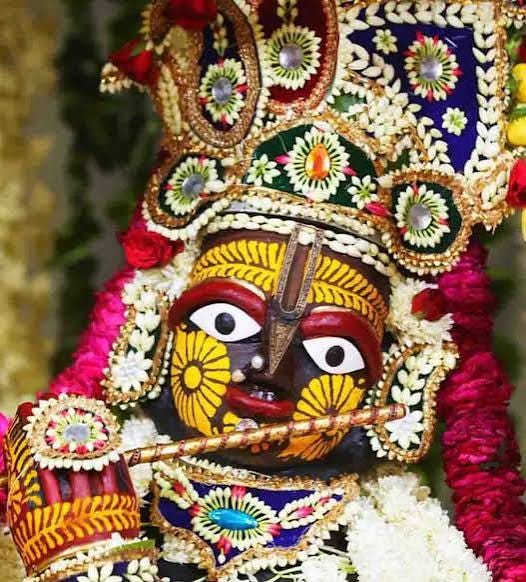
From Debate to Bhāgavata Unity
Perhaps the real test is not whether we follow prove our sampradāya right, but whether we can recognize Bhagavān is truly one, and here lies a call for pan-vaishnava unity
If one is following Gauḍīya vaishnavism: please take delight in reading about Shri Andal, who is same as Radharani. Shri Andal wore the garlands as a child and Shri Krishna Narayana would only accept those garlands she wore. Such are the exalted devotees. Please genuinely learn about Śrī Rāmānuja, Vedānta Deśika and the Āḻvārs like Shri Kulasekara who wrote mukunda mala stotra. Please celebrate appearance days of great acharyas Madhavacharya, Sri Ramanuja. Take delight in understanding Shri Ramanuja is swayam Shri Balaram, also adishesha, and the original spiritual master.
When visiting South Indian temples, see the same Bhagavān being worshipped as Śrīman Nārāyaṇa. Invite Vaiṣṇava ācāryas and speakers from different traditions to speak at our temples and communities.
And if one follows Śrī Vaiṣṇava, Mādhva or another Vaiṣṇava tradition: please come to Mathurā and Vṛndāvana. Enter Vraja. Visit its temples. Learn its ācāryas. Hear why devotees love Kṛṣṇa as child, friend and beloved.—try to develop unconditional love and relation with Krishna. Our same bhagavan.
The hurdles are only self made: inherited sampradaya identities, selective quotations, slokas, social boundaries, unfamiliarity with other sampradāyas, and the fear that appreciating another tradition weakens one's own.. Those are not true.
Remember Krishna/Narayana is the same.
Lets serve all vaishnava devotees equally, who are worthy of respect.
Vāñchā-kalpa-tarubhyaś ca kṛpā-sindhubhya eva ca
Patitānāṁ pāvanebhyo vaiṣṇavebhyo namo namaḥ.
I offer my repeated obeisances to the Vaiṣṇavas, who are wish-fulfilling trees, oceans of mercy, and purifiers of those who have fallen.
Hare Krishna
Sriman Narayana Sripadame sharanam
Share
This article