Ranga B · 19 May 2026
Sri Narasimha Kshetra Mahima
Everything about Narasimha is wow, Aho, also his divya shetras = temples
Share
This article
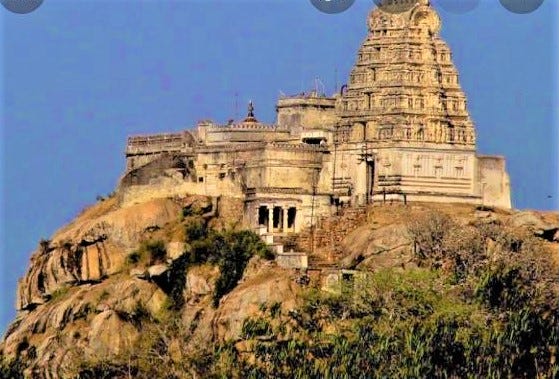
[Please visit: https://kshetras.eat-sattvic.com ]
Everything about Narasimha is wow, Aho, also his divya shetras = temples
“Aho Veeryam Aho Souryarn Aho Bahuparakramah
Naarasimham Param Daivam Ahobilam Aho Balam”
“Aho” refers to wow, awe, magnificent wonder.
Ahobilam is accepted in Vaiṣṇava tradition as a primary kṣetra of Lord Nrsimha’s manifestation, located within the Nallamala hill region.
Geography: Nallamala hill range, dense forest terrain
Tradition: Recognized Nrsimha avatāra-sthala in Vaiṣṇava sampradāyas
Trek to 9 Narsimha temples, and to peak of mountain for Ugra stambha (where lord actualy appeared from the pillar).
Here also the footprint of shri krishna = chaitanya mahaprabhu is seen and worshipped by vaishnava devotees
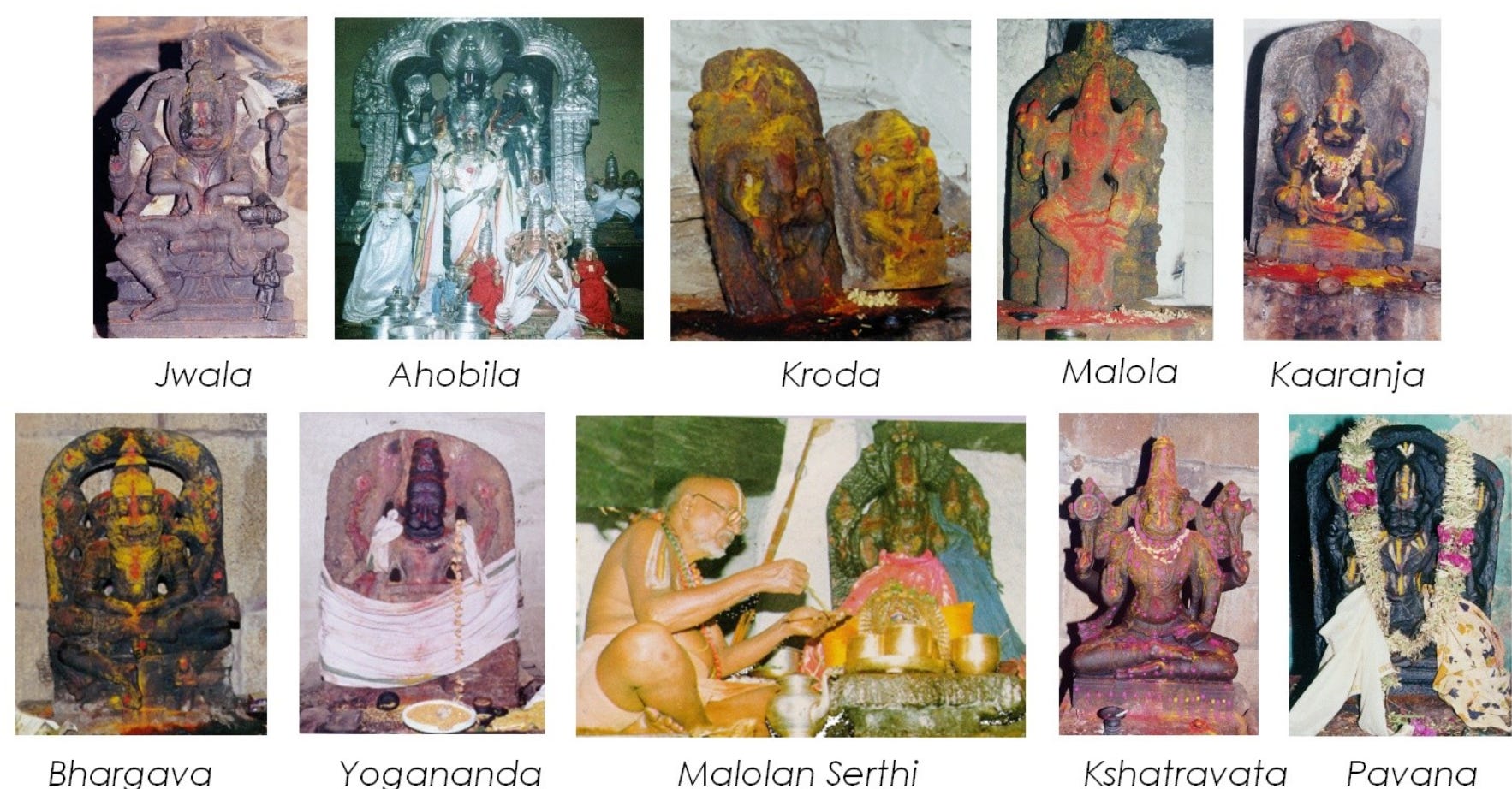
According to Sthala Purana, there are two popular legends for the derivation of the word ‘Ahobilam’. It is stated that the Devas (Gods), while witnessing the terrific aspect (Ugra Kala), the lord took on in order to tear to pieces Hiranyakasipu sung in His praise as ‘Ahobala’ (Lo: the strength). Hence this place has come to be known as Ahobilam. In support of this, there is a prapatthi sloka about-Ahobilam that reads:-
Jwala Ahobila Malola Kroda Karanja Bhargava
Yogananda Kshatravata Pavana Nava Moorthayaha.
The Nine Narasimha sthalas are :- 1. Jwala Narasimha 2. Ahobila Narasimha 3. Malola Narasimha 4. Kroda Narasimha 5. Karanja Narasimha 6. Bhargava Narasimha 7. Yogananda Narasimha 8. Kshatravata Narasimha and 9. Pavana or holy Narasimha.
Bhargava Narasimha, the Lord is worshipped where Bhargava Rama performed penance at Bhargava Theertham, giving the deity this sacred name. This temple is also associate with Bhrigu Muni / Bhargava rishi
At Yogananda Narasimha, the Lord taught yoga to Prahlada after slaying Hiranyakashipu, appearing in a peaceful, instructive form.
At Chatravata Narasimha, the deity is installed beneath a peepal tree surrounded by thorny bushes, symbolizing His presence in a wild, protective setting.
At Ahobila Narasimha, the Lord manifests in His fierce self-manifested form, emerging as the central and most powerful deity of Ahobilam.
At Krodakara (Varaha) Narasimha, He appears with a varaha form alongside Lakshmi, uniting the Varaha and Narasimha forms in divine harmony.
At Karanja Narasimha, the Lord resides under the Karanja tree, giving the shrine its identity and sacred natural setting.
At Malola Narasimha, He appears in a gentle, loving form with Lakshmi, symbolizing divine grace and is uniquely worshipped by the Jeeyars of Ahobila Mutt. Lord Narasimha appears in ‘soumya’ (graceful) form. As Lord Narasimha is seen with Lakshmi ji, He is known as Malola Narasimha Swamy. The word ‘Malola’ means beloved to Lakshmi (Ma=Lakshmi, Lola= beloved). It is said that the ‘utsavamoorthi’ of the Lord appeared to Srimath Adivan Satakopa Jeeyar, the first Jeeyar of Ahobila Mutt.
At Jwala Narasimha, the Lord is remembered in His most intense form, where His fury reached its peak during the destruction of Hiranyakashipu.
At Pavana Narasimha, He is worshipped on the banks of the Pavana river, representing purity and cleansing divine presence. Lord Narasimha moved through these forested hills, where He met mataji Chenchu Lakshmi, who represents the simple, natural devotion of the forest tribes. Their union symbolizes the Lord’s position as protector to compassionate guardian of all beings and all nature.
At Ugra Sthambha, the pillar-on top marks the very spot from which Narasimha is emerged. Lord Shri Krishna Chaitanya Mahaprabhu’s footprints are also found at the top hill near Ugra Stambha, making it double auspicious

At Prahlada Mettu, Prahlada himself is honored in a cave shrine, symbolizing pure devotion, while Rakthakundam nearby is believed to still bear the red trace of Narasimha’s act.
The other version is that because of the great cave, the Ahobila, where Garuda worshipped, did penance and realised the lord, the place itself has come to be called Ahobilam.
This continuity is not symbolic but structural within Vaiṣṇava ontology: the same Nṛsiṁha who appeared in stambha manifests across kṣetras as arcā-mūrti, where the Lord remains directly accessible to his devotees.
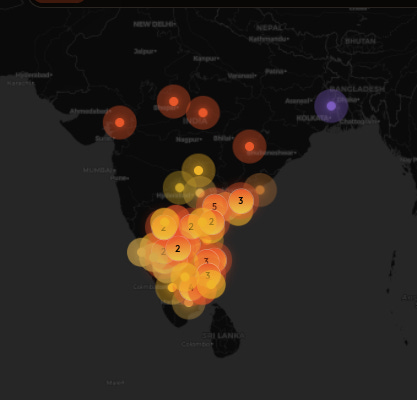
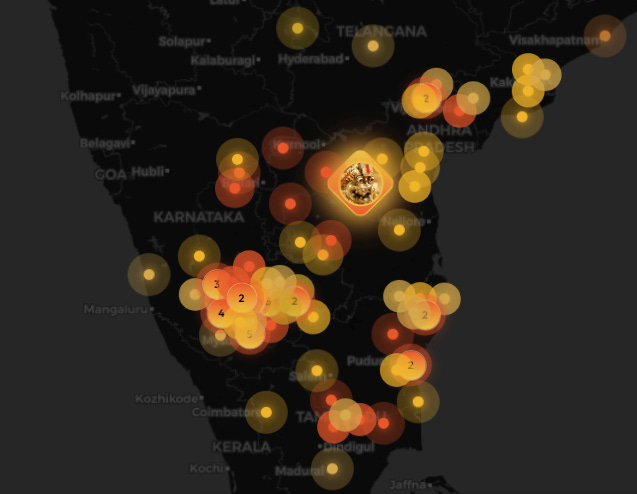
Approximately 90% of Nrsimha temples are in South India - Many of thesse temples have swambhu self manifest deity, and with very spectacular, unique pastimes of lord Nrsimha, that is unimaginable - in each temple
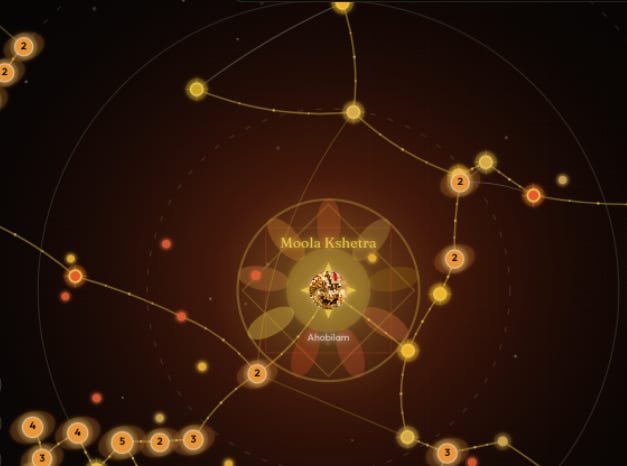
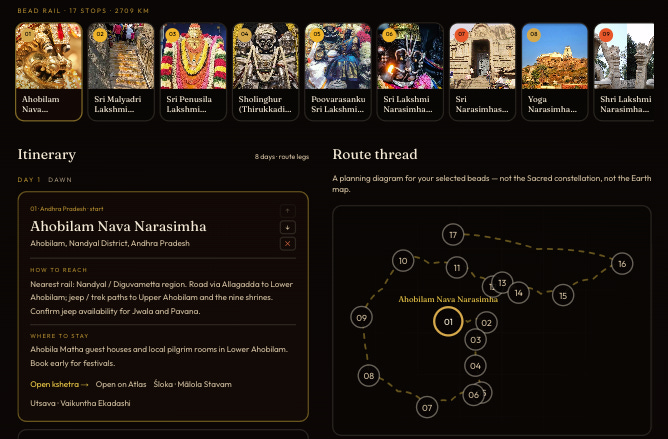
Narasimha Temples heatmap, Yatra Routes:
Source —> https://kshetras.eat-sattvic.com

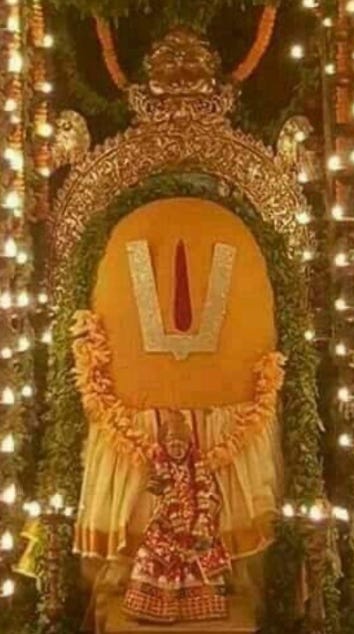
Varaha-Lakshmi Nṛsiṁha - Simhachalam (Andhra Pradesh) – Varaha-Lakshmi Nṛsiṁha whose form is hidden under layers of sandalwood paste, only revealed once a year on special occasion to devotees. The deity is so fiery jwala that they have to cover with sandalwood paste, and on the day of natural form darshan the whole regions temparature is observed to sharply rise
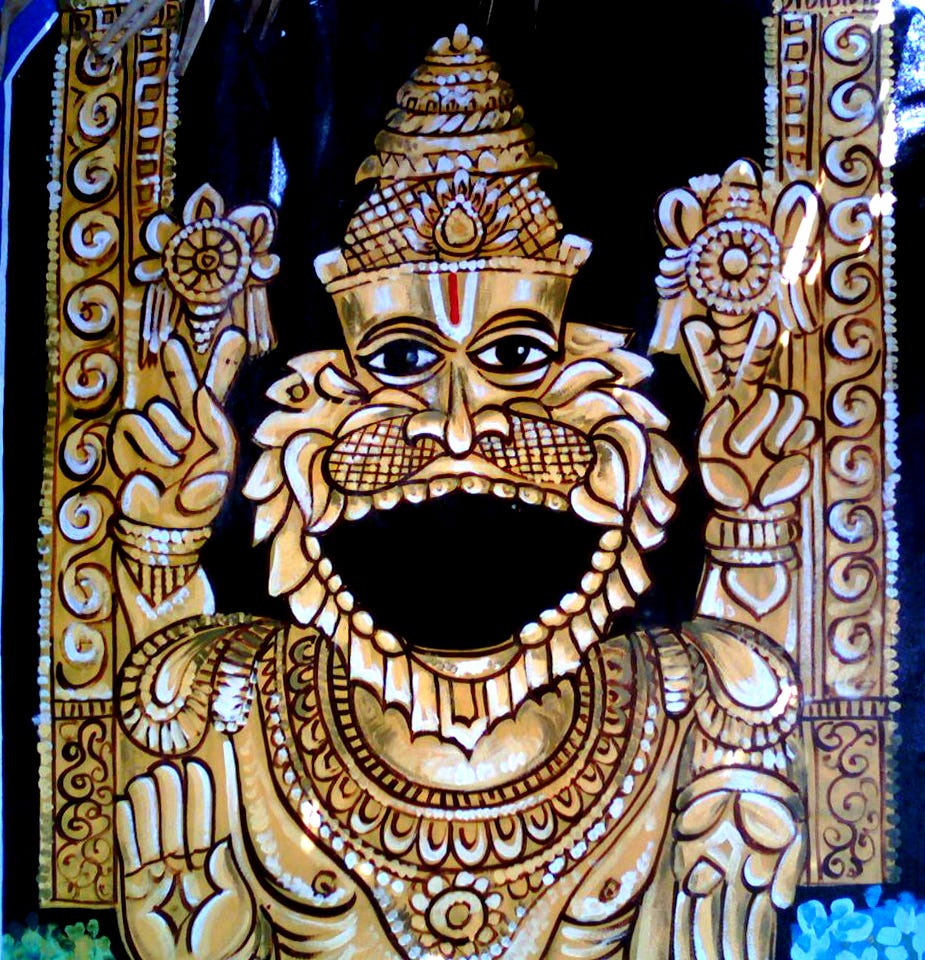
Panakala Nrsimha, Mangalagiri (AP) – Panakala Nṛsiṁha Swamy of Mangalagiri is revered as a special form of the Lord who directly receives devotion. Devotees offer panakam (jaggery water) by pouring it into his open mouth, and he truly drinks it—often marked by a gentle gulping sound. His divine presence makes the worship feel immediate, personal, and deeply meaningful.
Yadadri / Yadagirigutta (Telangana) – Self-manifested Nṛsiṁha emerging from natural stone, showing that the Lord is eternally present

Shri Lakshmi Nrsimha, Antarvedi (AP) – Nṛsiṁha at the sacred meeting point of river Godavari and the ocean, symbolizing the convergence of all spiritual paths into one supreme lord Nrsimha

Namakkal Shri Lakshmi Narasimha (TN)
The Saligrama brought by Hanuman on the way to serve Ram’s mission in Lanka, is transformed into a massive living hill by Lakshmijis blessing, giving the place its very name, Namagiri.
The Lord Nrsimha is said to have shifted from ugra to completely calm form here, as if responding to devotion in real time, while Lakshmi and Narasimha are seen in a rare united, loving form. Hanuman himself is believed to still stand eternally before the Lord Nrsimha, fully fixating his eyes on the lotus feet of the lord
Opposite the Narasimha cave is a massive, 18-foot statue of Hanuman (Anjaneya) carved from a single stone. Hanuman requested to remain there to witness the “Vishwarupa Darshan” of bhagwan, Narasimha. The hanuman deity in namakkal has no roof or gopuram above it, and keeps growing every day every year

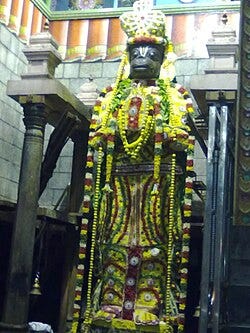
Sholinghur Yoga Narasimha (TN) – Lord once again displayed the Narasimha Avataaram to saptha rishis, who undertook penance at Sholingur. Hence, this is said to be the one of the most sacred of “Divya Desams on the Hill” in Tamil Nadu.
Sage Vishwamitra, who undertook penance here, was blessed with ‘Brahmma Rishi’ by Lord Narasimha, within 24 minutes (One Kadigai). Following the foot steps of the great sage, Saptha Rishis too undertook penance here at Sholingur wanting a darshan of the Narasimha Avataar and hoping to get the darshan within 24minutes!! Hence, it is believed that one who stays here for 24 minutes will attain Moksha.
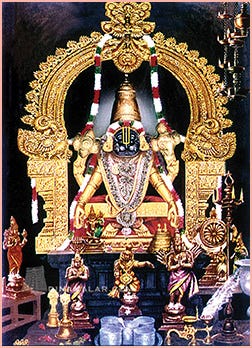
Shri Yoganarasimha Temple, Melukote (KA) Here Lord Nrsimha in His calm yogic form, radiating peace after the compassionate act of protecting Prahalada.
It is believed He chose this hill to remain in deep meditation, blessing devotees with happiness and inner balance. Associated with Sri Ramanujacharya, this kshetra is is a very prominent destination for devotees. The Vairamudi Festival at Melukote is a sacred annual event where Lord Cheluvanarayana Swamy is adorned with the divine diamond crown, Vairamudi. The crown, believed to be brought by Garuda, is revealed only once a year during a grand midnight procession. Devotees see it as a rare devotional moment
Sri Yoganarsimha Swamy Devastana, Saligrama
,Ramanujacharya is said to have first set his foot at Saligrama.Hence, it has acquired a place in religious history as a sacred place. His followers reside in goodnumbers in this town. Initially, the villagers of Saligrama were opposed to Ramanuja. But, the saint turned the water of the pond holy and when the villagers drank it, they felt a changeand took to Vaishnavism. The saint’s followers consider the water of the pond bestowed with healing powers even now. Ugra Narasimha. After writing his interpretations propounding Vaishnavism, Ramanujas parayers converted ugra ) to yoga (meditative)Narasimha.. Gauhama Rishi did the initial Prathista of the idol here.. It is said Nam Alzhwar got the temple constructed in 24 hours here. Then it seems Ramanujacharya had dream that he should visit this Kshetra and On arriving in Karnataka Ramanuja reached Saligrama it is also known as Shalapuri. The serene atmosphere of the place appealed to him.
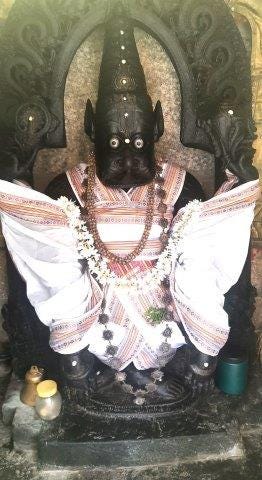
Shri Narsimha Jharna Mandir, Bidar (KA) This temple is situated at around 5 km from Bidar city. One has to wade through waist deep water to reach the lotus feet of bhagwan Nrsimha. Narasimha on the wall at the end of a cave,and it is an architectural wonder. A perennial stream of water is said to be flowing continuously for hundreds of years in this place. It is a thrilling experience to walk through waist deep water for 300 meters through a cave-like tunnel, to seek a view of Lord Narasimha. People utter the words govinda-govinda and narasimha hari-hari with devotion as mantras. Around eight people can stand and watch this spectacular sight as there is very little space in there. Others need to wait in the water for their turn. Nrasimha is self manifested swayambu form here. The water is said to have healing properties for people having skin problems


Mudigere Sri Yoga Narasimha Swamy Temple (KA)
Shri Nrsimha is in ugra rupa here until about 500years ago when Sri Lakshmi Varaha Swamy idol wasn’t installed yet. Because of this, before opening the door of the temple, devotees used to place a bundle of green husk in front of the door and then open it. Because of the ferociousness of the deity, the husk bundle used to catch fire and burn up. Only after this, the devotees used to enter the temple.
To pacify the lord, Sri Lakshmi Varaha Swamy idol was installed directly in the line of sight of Sri Yoga Narasimha Swamy as the shanta moorty. Even today before opening the door of Sri Yoga Narasimha Swamy mantap, the door of Sri Lakshmi Varaha Swamy garbha griha is opened first. The first sight of Sri Yoga Narasimha Swamy always falls on Sri Lakshmi Varaha Swamy and only after that, the devotees enter the temple. The turmeric alankara for Sri Yoga Narasimha Swamy at this temple is widely famous
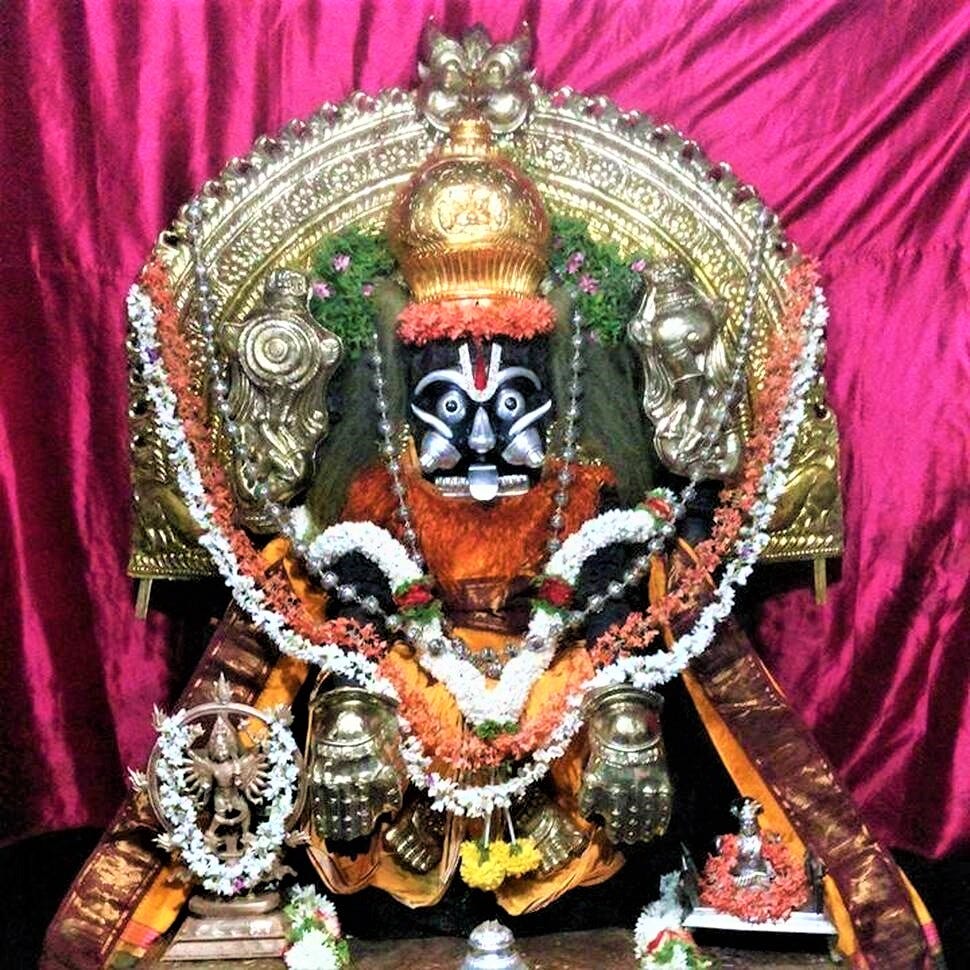
Sri Ugra Narasimha Swamy Maddur (KA)
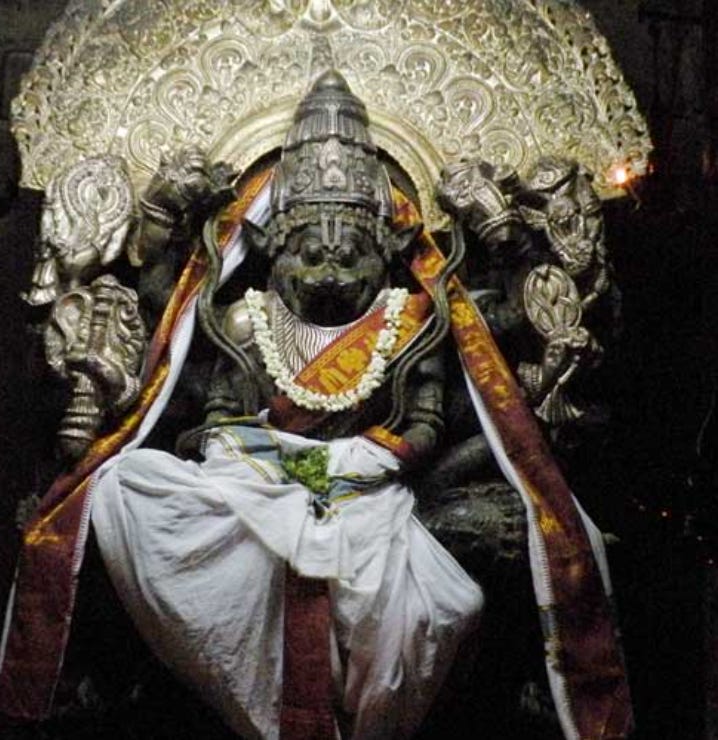
Very special form of Nrsimha here (Trinetradhari) t is said that Lord’s third eye came when he was doing the Hiranyakasipu’s Samhara. Let us recollect Shri Vijayeendra teertha glorifying this form of Nrsimha as jvālākēśaṁ trinētraṁ jvaladanalanibhaṁ hārakēyūrabhūṣam, Flaming hair, three-eyed, shining like fire, adorned with ornaments.
Lord gives darshan with eight hands and Three eyes which is a very rare sight. With two hands he is tearing the Asura Hiranya Kasipu who is lying in his lap, with other two hands he is wearing the Hiranya Kasipu’s Intestine as Mala, then in the other two hands he is holding Pasha and Ankusha and in other two hands as usual he is holding the Shanku and Chakara. At the feet of lord Garuthaman stands on left side and on the right Bhaktha Prahalada is standing in Posture doing Namskaram.
Arjun witnessed the ugra form of the Lord and it appeared as if Lord himself appeared before him live. His mind firmed up with the grace of Lord Narasimha to continue the fight more vigorously to uphold good against evils. When he opened his eyes, he saw Lord Krishna standing before him smiling. The same place became a temple centuries later.. Puranas say that Sri Kadamba Rishi lived here and worshipped the Lord due to this it is also know as Kadamba Kshetra
Sri Stambha Lakshmi Narasimha, Billur (KA)
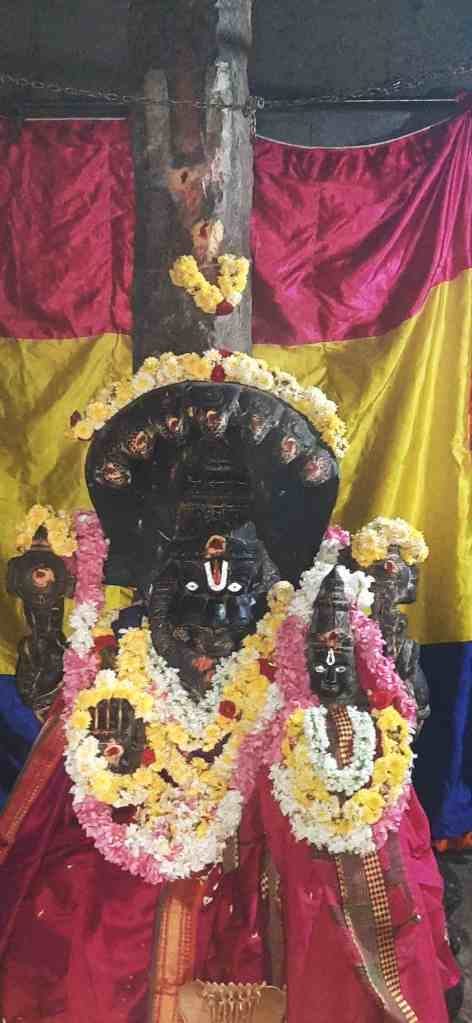
Lord Nrsimha is Swamyambu(self manifested) in the pillar of thia temple is Shanta swaroopa with goddess Lakshmi. Ths small temple is on a small hillock . At the time of construction Nrsimha deity was found to be growing day-by-day and also Gopurams & other constructions were becoming unstable due to the continuous growth of the Stambha (the pillar). The depth of the lower part of the pillar under the ground is not known, but above the ground the upper part of the Stambha is 16 ft high on which the portrait of the Lord Sri Lakshmi Narasimha Swamy along with shankha and chakra is naturally engraved. There are clear evidences of the construction of the Mukha Mandapam during the reign of Sri Krishna Devaraya
Sri Lakshmi Narasimha Swami Gudi, Sugganahalli (KA)
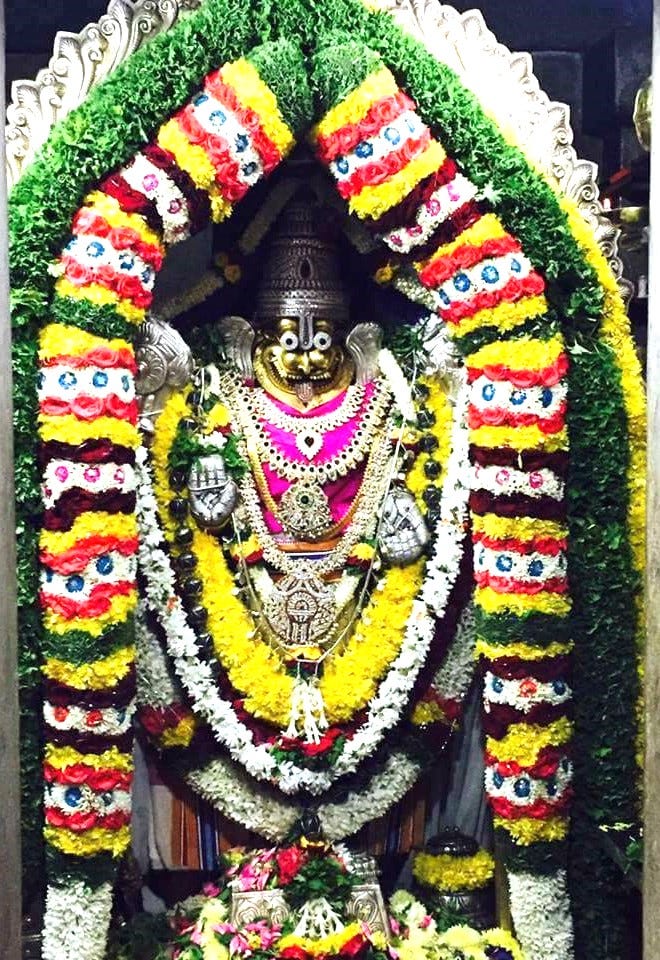
Sage Shuka performed intense penance under a Badari tree in the place where the present day temple is located. The sage had the darshan of Narasimha murti along with Goddess Lakshmi. The murti Lakshmi Narasimha worshipped in the temple is in the same form in which Sage Suka had darshan.
Garuda is being worshipped daily here because Sage Shuka also had darshan of Garuda here. Devotees suffering from skin ailments and other diseases find relief after offering prayers to Garuda in the temple. The temple is also an excellent Sarpadosha Nivaran stal as it has the presence of Garuda.
There is a huge Elachi tree in the backyard of the temple, special offerings are made to the tree and to the footprints of Lord Narasimha found here.
Share
This article