Ranga B · 20 May 2026
The perfect parent
Who is the True Parent? Vaiṣṇava siddhānta answers beautifully. Material parents give the body; The supreme lord, Bhagavan Shri Kṛṣṇa - Narayan gives existence to the soul and eternally guides and protects it. He is the
Share
This article
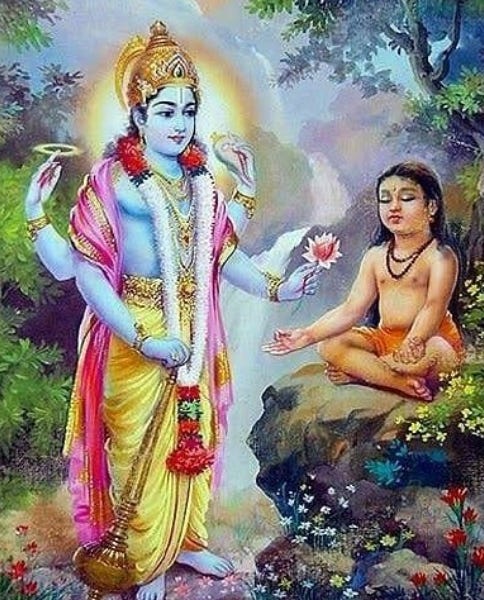
Who is the True Parent?
Vaiṣṇava siddhānta answers beautifully. Material parents give the body; The supreme lord, Bhagavan Shri Kṛṣṇa - Narayan gives existence to the soul and eternally guides and protects it.
He is the complete parent—through janakatva and perfect rakṣakatva.
Kṛṣṇa declares:
ahaṁ bīja-pradaḥ pitā (Bhagavad-gītā 14.4)
He is the father of all beings—including Brahmā—not merely because He creates them, but because He continually sustains them (Gītā 9.18).
Śrī Nṛsiṁha-līlā reveals this truth in its highest expression.
Having a Child vs. Nurturing a Child
Hiraṇyakaśipu had a son, but never understood the soul entrusted to him. He wanted Prahlāda to inherit his power, identity, and ambition.
Prahlāda wanted something else entirely—to be an eternal servant of Śrīman Nārāyaṇa.
This is the deepest test of parenthood:
Can a parent rejoice in a child whose purpose differs from their own?
In a world chasing degrees, careers, and status, can we celebrate a child drawn toward service, creativity, conservation, or spiritual life? How many parents are cool if their kids want to become Nature photographers, wildlife conservationists, writers, teachers, what not..
Nṛsiṁha’s līlā answers:
The true parent does not own the child; the true parent protects the child’s eternal purpose.
Protecting the Child’s Inner World
Children build their lives upon truths: that honesty is greater than shortcuts, compassion greater than aggresive competition, and every living being deserves care. Think good, do good to others.
Prahlāda’s truth was higher still—Bhagavān Himself.
So Hiraṇyakaśipu’s final attack was not on Prahlāda’s body but on his reality:
“Is your Lord in this pillar?”
He was really asking,
“Can the truth you live by survive against my power?”
Bhagavān answered by appearing from the pillar, as receited in the Bhāgavatam’s declaration:
satyaṁ vidhātuṁ nija-bhṛtya-bhāṣitam...
vyāptiṁ ca bhūteṣv akhileṣu cātmanaḥ
adṛśyatātyadbhuta-rūpam udvahan
stambhe sabhāyāṁ na mṛgaṁ na mānuṣam
He appeared to uphold His devotee’s truth.
The highest parent protects not only the child physically, but the child’s truth, values, and inner world.
Showing Up
Parents know the importance of presence.
A school performance, a sports match, a difficult day—simply showing up tells a child,
“You matter.”
Prahlāda faced not a playground challenge but the conqueror of the universe.
Yet he remained fearless.
When Hiraṇyakaśipu struck the pillar—
Nṛsiṁha appeared.
Immediately.
The true parent shows up when it matters most.
And that shelter did not weaken Prahlāda.
The highest protection creates strength, not dependence.
Love Has No Limits
A parent works extra hours so the child has opportunities they never had. They sacrifice their own comforts to provide better education, a safer future, or even something as simple as seeing their child smile. They wake up early, stay awake late, learn new skills, travel long distances, and keep going when they themselves are exhausted.
The question is no longer, “Is this convenient?” The only question is: “What does my child need?”
Mountains will be moved by the parent.
That is the nature of real parental love.
And if we, with our limited love, instinctively transcend our own boundaries for our children, what are the limits of Bhagavān’s love for His devotee?
Hiraṇyakaśipu thought Brahmā’s boon had made protection impossible.
Not by man.
Not by beast.
Not in day.
Not in night.
Not inside.
Not outside.
Not by astra. Not by Shastra.
Not by Living.
Not by the non-living
But he forgot one truth: Bhagavān is not limited by the conditions of creation. And bhagvan’s love for devotee is beyond any limits and constraints. The supreme lord took a spectacular form, as Shri Nṛsiṁha. In a spectacular series of events, the Lord beat every rule every limit and protected Prahlada.
Parental love does not ask whether is possible; it always finds the way.
The Right Strength
Protection is measured not by what happens to the enemy,
but by what remains in the child.
The bullied child should not become a bully.
The rejected child should not become bitter.
The upset child should not lose compassion.
Prahlāda watched Hiraṇyakaśipu defeated, yet remained free from hatred.
The greatest strength a parent gives is the ability for a child to remain gentle in a tough world.
Correction With Compassion
Nṛsiṁha’s justice was restoration, not punishment.
He removed the evil inside hiranyakashipu, and Prahlāda prayed for his father’s eternal welfare.
Likewise, discipline should restore character, not satisfy anger.
When a child lies, the point isn’t to make them terrible—it is to restore honesty.
When a child acts selfishly, the goal is not shame—it is to awaken compassion.
When a child fails, the goal is not to break confidence—it is to build wisdom.
Prahlāda revealed the highest result of divine correction. Even after everything he endured, he prayed for Hiraṇyakaśipu. The wrong was destroyed. But compassion remained.
True correction destroys the wrong without destroying compassion.
Conclusion
This is the difference. Hiraṇyakaśipu sought to possess Prahlāda. He wanted a son who served his ambition.
Nṛsiṁha allowed Prahlāda to follow his eternal nature and empowered him for true greatness.
That is perfect parenthood.
Śrī Nṛsiṁha reveals the complete meaning of being a parent: To protect without being asked, remain when all others fail, preserve the child’s truth, transcend every circumstance, protect innocence, and correct with compassion.
Therefore, Bhagavān Śrī Kṛṣṇa, manifest as Śrī Nṛsiṁha, alone is the complete parent of every living being.
Share
This article