Ranga B · 27 August 2026
The Sevaka Bhagwan: Śrī Balarāma
Sri Balarama, saṅkarṣaṇaḥ as explained across Vaiṣṇava sampradaya
Share
This article
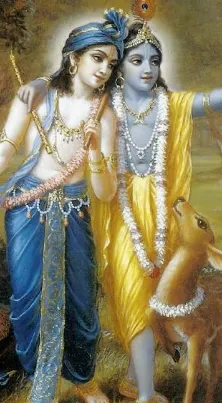
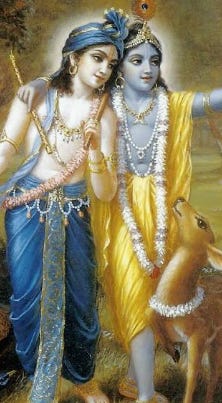
Across Sanātan Dharma, and Ācāryic traditions, Krishna, the supreme Personality of Godhead he manifests himself in dual features:
Swayam-Bhagavān (the Supreme Personality of God, Krisha, who is served by devotees) and
Sevaka-Bhagavān (the Supreme Being again himself in special form who renders service, showing how a perfect devotee should be).
The explanation here is about Lord Balarāma. He is the first expansion of Shri Krishna and non-different than Krishna.
Whether viewed through the Acintya-Bheda-Abheda framework of Gauḍīya Vaiṣṇavism as mentioned in Śrīla Kṛṣṇadāsa Kavirāja Gosvāmī’s Śrī Caitanya-caritāmṛta, or through the Viśiṣṭādvaita philosophy of Śrī Rāmānujācārya, Lord Balarāma—manifesting as Lakṣmaṇa, Saṅkarṣaṇa, Ananta Śeṣa, and Lord Nityānanda—stands as the divine pillar of cosmic sustenance, spiritual strength (bala), and transcendental devotion (guru-tattva).
Part I: Transcendental Ontology
In Śrī Caitanya-caritāmṛta (Ādi-līlā, Chapters 1, 2, and 5), Śrīla Kṛṣṇadāsa Kavirāja Gosvāmī extracts the essential truth of the Śrīmad-Bhāgavatam to explain about Lord Balarāma (Mūla-Saṅkarṣaṇa).
1. The First Expansion (Balaram, Mūla-Saṅkarṣaṇa)
Śrī Kṛṣṇa is Svayaṁ Bhagavān—the original source of all emanations (kṛṣṇas tu bhagavān svayam, SB 1.3.28). His immediate, identical expansion (vilāsa-mūrti) is Lord Balarāma. Balarāma is non-different from Kṛṣṇa in potency, form, and absolute status, yet differs in minor aspects and rasa, adopting the disposition of the eternal devotee.
Śrī Caitanya-caritāmṛta (Ādi 5.4–6) states:
mātā, pitā, bhrātā, bandhu, sevaka, vitāna
e-saba rūpe kare kṛṣṇa-sevāna-vidhāna
“Lord Balarāma serves Śrī Kṛṣṇa in all capacities: as His mother, father, brother, friend, servant, umbrella, and bedding. He provides the full paraphernalia for Kṛṣṇa’s divine pastimes.”
2. The Catur-vyūha
From Lord Balarāma emanates the first Catur-vyūha (quadruple expansion) in the supreme realm: Vāsudeva, Saṅkarṣaṇa, Pradyumna, and Aniruddha.
Vāsudeva: The presiding lord all existence and original consciousness (sat).
Saṅkarṣaṇa: full of knowledge (cit), spiritual strength, and the ultimate principle behind cosmic forces
Pradyumna: Has eternal bliss (ānanda) and intelligence (buddhi).
Aniruddha: The controller of physical mind (manas) and ego (ahaṅkāra).
From the Saṅkarṣaṇa of the first quadruplet manifests Mahā-Saṅkarṣaṇa in the Vaikuṇṭha sky (Paravyoma). From Mahā-Saṅkarṣaṇa originates the second Catur-vyūha, whose Saṅkarṣaṇa feature expands directly into the three Puruṣa-avatāras who govern the material creation:
The three Vishnu-purusa avataras are
Kāraṇodakaśāyī Viṣṇu (Mahā-Viṣṇu): Emanates millions of universes from His pores during exhalation.
Garbhodakaśāyī Viṣṇu: Enters each universe to seed life and support Lord Brahmā.
Kṣīrodakaśāyī Viṣṇu: Expands as the Paramātmā (Supersoul) in the hearts of all living entities and every atom.
Śrī Kṛṣṇa (Svayaṁ Bhagavān)
   │
   └──► Lord Balarāma (Mūla-Saṅkarṣaṇa / Sevaka-Bhagavān)
          │
          ├──► 1st Catur-vyūha (Vāsudeva, Saṅkarṣaṇa, Pradyumna, Aniruddha)
          │      │
          │      └──► Mahā-Saṅkarṣaṇa (Vaikuṇṭha / Paravyoma)
          │             │
          │             └──► 2nd Catur-vyūha
          │                    │
          │                    └──► Puruṣa-Avatāras
          │                           ├──► 1. Kāraṇodakaśāyī Viṣṇu (Mahā-Viṣṇu)
          │                           ├──► 2. Garbhodakaśāyī Viṣṇu
          │                           └──► 3. Kṣīrodakaśāyī Viṣṇu (Paramātmā)
          │
          └──► Ananta Śeṣa (Supports the Universes & Serves as Viṣṇu's Bed)
As written in Śrī Caitanya-caritāmṛta (Ādi 5.41):
mayāyāre sparśa nāhi, sabāreī pāra
māyātīta paravyome sabāra pracāra
“All these expansions remain untouched by the material energy (māyā). Their eternal domain is the transcendental realm, beyond the material manifestation.”
Part II: Viṣṇu Purāṇa + Bhāgavatam
Our transcendental literature highlights Saṅkarṣaṇa’s cosmic role as both the foundational pillar and the ultimate destructive force of time (Kāla).
1. Cosmic Anchor
In the Viṣṇu Purāṇa (Book 2, Chapter 5), Śrī Parāśara Muni describes the glory of Saṅkarṣaṇa residing at the base of the nether regions (Pātāla):
yasyaitad akhilaṁ viśvaṁ golaṁ kāṅkaṇavad sthitam
mūrdhny eka-tasya devasya saṅkarṣaṇo ‘nanta-rūpa-dhṛt
“That Supreme Lord, who holds this entire collection of universes on a single hood like a tiny mustard seed, is Saṅkarṣaṇa, possessing infinite forms.”
The Viṣṇu Purāṇa explicitly links Saṅkarṣaṇa to the dissolution (pralaya) process: at the end of a kalpa, the venomous fire (Rudra) issues from the brows of the thousand-headed Saṅkarṣaṇa to consume the three worlds.
2. The Source of Spiritual Strength
The Śrīmad-Bhāgavatam establishes the essential identity of Balarāma through key verses:
SB 1.3.23:
ekonaviṁśe viṁśatime vṛṣṇiṣu prāpya janmanī
rāma-kṛṣṇāv iti bhuvo bhagavān aharad bharam
“In the nineteenth and twentieth incarnations, the Lord advented Himself as Lord Balarāma and Lord Kṛṣṇa in the family of Vṛṣṇi, and by so doing He removed the burden of the world.”
SB 10.13.68:
Śrīla Śukadeva Gosvāmī refers to Balarāma as balābhadraḥ, the source of all spiritual and material energy, through whom Lord Kṛṣṇa manifests His creation.
Part III: Śrī Vaiṣṇavism, Rāmānujācārya, and the Epics
In the Śrī Vaiṣṇava Sampradāya, founded on the Viśiṣṭādvaita (qualified non-dualism) philosophy of Śrī Rāmānujācārya, the concept of Lord Balarāma/Saṅkarṣaṇa is viewed through the doctrine of Śeṣa-Śeṣī Bhāva (the eternal relationship between the Supreme bhagavan and the devotee).
1. Śeṣatva (Eternal Subservience)
In his masterworks—Śrī Bhāṣya, Vedārtha-saṅgraha, and Gītā-bhāṣya—Śrī Rāmānuja defines the soul’s inherent nature as śeṣa (subservient to Sriman Nārāyaṇa, the Śeṣī).
Lord Balarāma/Saṅkarṣaṇa is celebrated as the personification of absolute śeṣatva. He does not view service as a restriction, but as the supreme expression of divine freedom and ecstasy.
Transcendental
Śrī Kṛṣṇa / Nārāyaṇa: Śeṣī (The Supreme lord / focus of all devotional service)
Śrī Balarāma / Saṅkarṣaṇa / Lakṣmaṇa: Śeṣa (The ultimate servitor / instrument, devotee and first-original spiritual master)
Cosmic
Śrī Kṛṣṇa / Nārāyaṇa: Central Enjoyer (Bhoktā)
Śrī Balarāma / Saṅkarṣaṇa / Lakṣmaṇa: Universal Sustainer & Strength, Guidance Provider
Avataric
Śrī Kṛṣṇa / Nārāyaṇa: Rāma → Kṛṣṇa → Gauranga
Śrī Balarāma / Saṅkarṣaṇa / Lakṣmaṇa: Lakṣmaṇa → Balarāma → Nityānanda
2. The Vālmīki Rāmāyaṇa: Śrī Lakṣmaṇa as the First Persona
Śrī Rāmānuja heavily references the Vālmīki Rāmāyaṇa to showcase how Saṅkarṣaṇa functions as Śrī Lakṣmaṇa. Lakṣmaṇa is described as Rāmasya dakṣiṇo bāhuḥ (”the right hand of Lord Rāma”) and Anuja-rūpī Hariḥ (Lord Hari Himself appearing as the younger brother).
In the Vālmīki Rāmāyaṇa (Ayodhyā-kāṇḍa 31.22), Lakṣmaṇa declares his eternal vow of service:
ahaṁ sarvaṁ kariṣyāmi jāgrataḥ svapataś ca te
raghava bhava saṁsāre vane ca sahitāvāvām
“I shall do everything for You, whether You are awake or asleep. O Rāghava, I shall serve You in every way, both in the kingdom and in the forest.”
Śrī Rāmānuja comments in his Gītā-bhāṣya that Lakṣmaṇa’s insistence on accompanying Rāma to the forest was not born of worldly sentiment, but of the soul’s constitutional requirement to serve the Supreme Lord without intermission (nitya-kaiṅkarya).
Part III-A: Śrī Ādiśeṣa per Śrī Vaiṣṇavas
Per Śrī Vaiṣṇavism, Śrī Ādiśeṣa is not merely a cosmic support; he is the original Nitya-Sūri (eternally liberated celestial servitor) and the supreme example of Kainkarya (uninterrupted divine service).
Scriptual references : Stotra-Ratnam
The very beautiful verse in Śrī Vaiṣṇava literature on Ādiśeṣa is the Stotra-Ratnam (Verse 40) composed by Śrī Yāmunācārya (the guru of guru of Śrī Rāmānuja):
nivāsa-śayyāsana-pādukāṁśukā- vpadhāna-varṣātapa-vāraṇādibhiḥ śarīra-bhedais tava śeṣatāṁ gataiḥ yathā-yochitaṁ śeṣa itīrite janaiḥ
Translation:
“O Lord! Ādiśeṣa assumes various physical forms to render appropriate services unto You—manifesting as Your residence (nivāsa), Your bed (śayyā), Your throne (āsana), Your sandals (pādukā), Your garments (aṁśuka), Your pillow (upadhāna), and Your royal umbrella to block the rain and sun (varṣātapa-vāraṇa). Because he is the perfection of eternal devotional service in every way, he is rightly called as Śeṣa.”
Scriptual references : Divya Prabhandham
Equally beautiful explanation is given by the Āḻvārs in the Nālāyira Divya Prabandham. Śrī Poigai Āḻvār writes in the Mudhal Thiruvanthathi (Verse 53):
irundhaal singaasanam
Nindraal maravadiyaam neel kadalul endrum
Punaiyaam manivilakkaam poompattam pulgumanaiyaam
Thirumaarkku aravam amaindhu
Translation:
Sendraal kudaiyaam: Ādiśeṣa/Sri Balaram, becomes the Lord’s umbrella whenever wherever the Lord Krishna moves about. Also think about this Ādiśeṣa’s very presence is for Sri Krishna-kainkaryam—service to Krishna. He does not merely perform one particular service. He becomes whatever is required for the Lord’s service. This is the ideal of śeṣatva: That is a central Śrī Vaiṣṇava understanding of also the jīva’s true nature ,that we have to learn following Balaram ji
“Irundhaal singaasanam” — When He sits, I am His throne, For Ādiśeṣa, every service to Sri Krishna is glorious.Whether he is above the Lord as an umbrella or beneath Him as a throne, his joy is simply in serving.
“Nindraal maravadiyaam” — When He stands, I am His foot-support. every posture of the Lord brings forth another form of Ādiśeṣa’s service. This is why the verse is really about kainkarya-svarūpa.
“Neel kadalul endrum punaiyaam” — In the vast ocean, I am always His boat t serve him. The emphasis is on word endrum, eternally in service, And the way of serving sri balaram does is indeed “limitless”, he acts in the occasion
“Manivilakkaam” — become His jewel-lamp, nothing is too small, he will do any service for Sri krishna. And interestingly Krishna needs no specific illumination, he’s all light, yet the beauty of Sri balarama is trying to serve Sri Krishna and krishna enjoys such loving relation.
Poompattam - become the silk pillow to rest, Everything needed.
“Pulgumanaiyaam” — become His couch to rest
Thirumaarkku aravam amaindhu “Ādiśeṣa, the serpent, is wholly devoted to the service of Tirumāḷ.”
Śrī Rāmānujācārya is the Direct Avatara of Ādiśeṣa
Śrī Rāmānujācārya is the direct advent (avatāra) of Śrī Balaram = Sri Ādiśeṣa Himself, appearing on earth to establish the Viśiṣṭādvaita philosophy and revive the path of Prapatti (unconditional surrender)
The Yatīndra-Mata-Dīpikā and the Prapannāmṛtam cite beautiful shlokas declaring the sequential incarnations of Śrī Ādiśeṣa:
anantaḥ prathamaṁ rūpaṁ lakṣmaṇaś ca tataḥ param
balabhadras tṛtīyas tu kalau kaścid bhaviṣyati
Translation:
“The first manifestation of the Lord’s intimate servitor is Ananta Śeṣa; his second manifestation is Śrī Lakṣmaṇa [in Tretā-yuga]; his third is Śrī Balabhadra [Balarāma in Dvāpara-yuga]; and in the age of Kali, he will appear once again as a great saint [Śrī Rāmānuja].”
Śrī Rāmānuja’s life demonstrated the core tattva of Ādiśeṣa—expanding himself endlessly to provide shelter to the Lord and His devotees:
Trascendental Protection: Just as Ādiśeṣa wraps his hoods around Śrīman Nārāyaṇa to support Him, Śrī Rāmānuja used his transcendental abilities to write the Śrī Bhāṣya, protecting the true Vaiṣṇava understanding of the Upanishads against mayavada impersonalist interpretations.
Trascendental mercy: At the temple of Thirukottiyur, Śrī Rāmānuja famously climbed the temple tower (gopuram) and revealed the sacred Aṣṭākṣarī Mantra (Om Namo Nārāyaṇāya) to all people regardless of caste, just like Ādiśeṣa’s nature of full mercy.
Images of Śrī Rāmānuja often show him with hands folded in añjali-mudrā, wearing the multi-hooded canopy of Śeṣha-nāga over his head, signifying that it was the same Ādiśeṣa who has now taken the form of the Jagadācārya (world teacher).
Part IV: Simultaneous Oneness and Difference
(Acintya-Bheda-Abheda)
The beauty binding all Vaiṣṇava perspectives on Balarāma/Saṅkarṣaṇa lies in simultaneous oneness and difference:
Abheda (Oneness): Balarāma and Kṛṣṇa are quantitatively and qualitatively equal in Viṣṇu-tattva. Both possess infinite power, omniscience, and supreme divinity. Balarāma is not a created jīva (individual soul); He is the Supreme Personality of Godhead Himself.
Bheda (Difference): Yet They differ in līlā-rasa (pastime mood) and rūpa (form). Kṛṣṇa is the object of love; Balarāma is the embodiment of devotion. Balarāma manifests as the spiritual master (Guru-tattva), providing the necessary spiritual strength (bala) to overcome the material energy.
Part V: The Advent of Lord Nitai
The transcendental passtives of Sri Balaram reaches its peak in the 16th century with the advent of Lord Nityānanda (Nitai), who is non-different from Lord Balarāma and Śrī Lakṣmaṇa.
While Balarāma wielded the plow (hala) and mace (musala) to eliminate physical demons, Lord Nityānanda transforms this into unconditional grace (audārya).
In Śrī Caitanya-caritāmṛta (Ādi 5.208–209), Kavirāja Gosvāmī concludes:
samsāra-samudra-haite uddhārena yāṅra
teṅho nityānanda-rāma—akrodha paramānanda
“He who delivers all souls from the ocean of material existence is Lord Nityānanda Rāma—eternally blissful and completely free from anger.”
Through the combined evidence of the Śrīmad-Bhāgavatam, Viṣṇu Purāṇa, Vālmīki Rāmāyaṇa, the commentary of Śrī Rāmānujācārya, and the divine synthesis of the Śrī Caitanya-caritāmṛta, Lord Balarāma shines as the eternal guide of all creation, the shelter of all devotees, and the primary guru to lead us.
Nothing is more beautifully expressed than Srila Bhaktivinoda Thakurs
Nadiya Godrume bhajan on Sri Nitai
Here it goes Enjoy the transcendental bliss
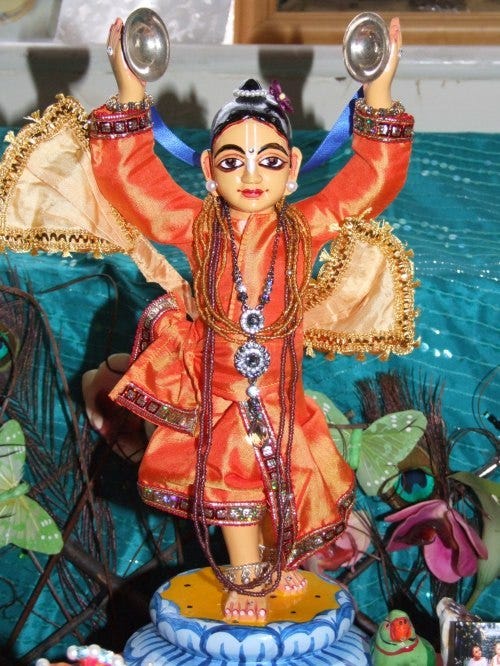
Nadiya-godrume nityananda mahajana
patiyache nama-hatta jibera karana
In Nadiya's Godruma the great soul Lord Nityananda has opened a marketplace to distribute mercifully the holy name to the conditioned souls.
(sraddhaban jana he sraddhaban jana he)
prabhura ajnaya bhai magi ei bhikha
bolo krishna bhajo krishna koro krishna-sikha
(The original come All je faithful ; O faithful people, O faithful people,)
O my people, by the Lord's command I ask this of you:
Please chant, Krishna!", worship Krishna, and learn and spread the glory of Krishna.
aparadha-sunya ho'ye loha krishna-nama
krishna mata krishna pita krishna dhana prana
Chant Krishna's name without offense. Accept Krishna as your mother. Accept Krishna as your father. Shri Krishna is your wealth and your life.
krishnera somsara koro chari' anacara
jibe doya krishna-nama sarba-dharma-sara
Give up all sins. Make Krishna your whole world. Be merciful to all souls. Chant Krishna's names. That is the essence of all religion.
Jaya Baladeva!
Jai Shri Krishna!
Share
This article