Ranga B · 12 May 2026
Mantrarāja-pada stotra
Of all the merciful avatāras of Lord Krishna-Nārāyaṇa, none is as awe-inspiring and magnificent as Śrī Narasiṃha. Everything about Him is extraordinary—including the remarkable ways His glories are composed in śāstra. On
Share
This article
Of all the merciful avatāras of Lord Krishna-Nārāyaṇa, none is as awe-inspiring and magnificent as Śrī Narasiṃha. Everything about Him is extraordinary—including the remarkable ways His glories are composed in śāstra.
One striking example is the mantra-garbha stotra: hymns where a mantra is hidden within the structure of the verses. At the outset they are stuti (praise), but arranged in a specific way they reveal maha mantra
Think of it like a transcendental crossword: each verse stands complete with deep meaning, yet when aligned in sequence, a higher mantra emerges.
A celebrated example is the Mantrarāja-pada Stotra, receited by Shankar Bhagavān, Lord Śiva himself . From twelve verses, one selected pāda from each forms a concealed Mahāmantra.
In that context, jaganmata Pārvatī asks Lord Śiva:
“Tell me the secret of all secrets, the Mahāmantra of all mantras,” pointing to the hidden essence within the stotra itself.
To the sincere devotee, bhagwan is accessible and the mantra reveals itself naturally.
Lets take transcendental delight reading this most beautiful stotra now
Mantrarāja-pada Stotra
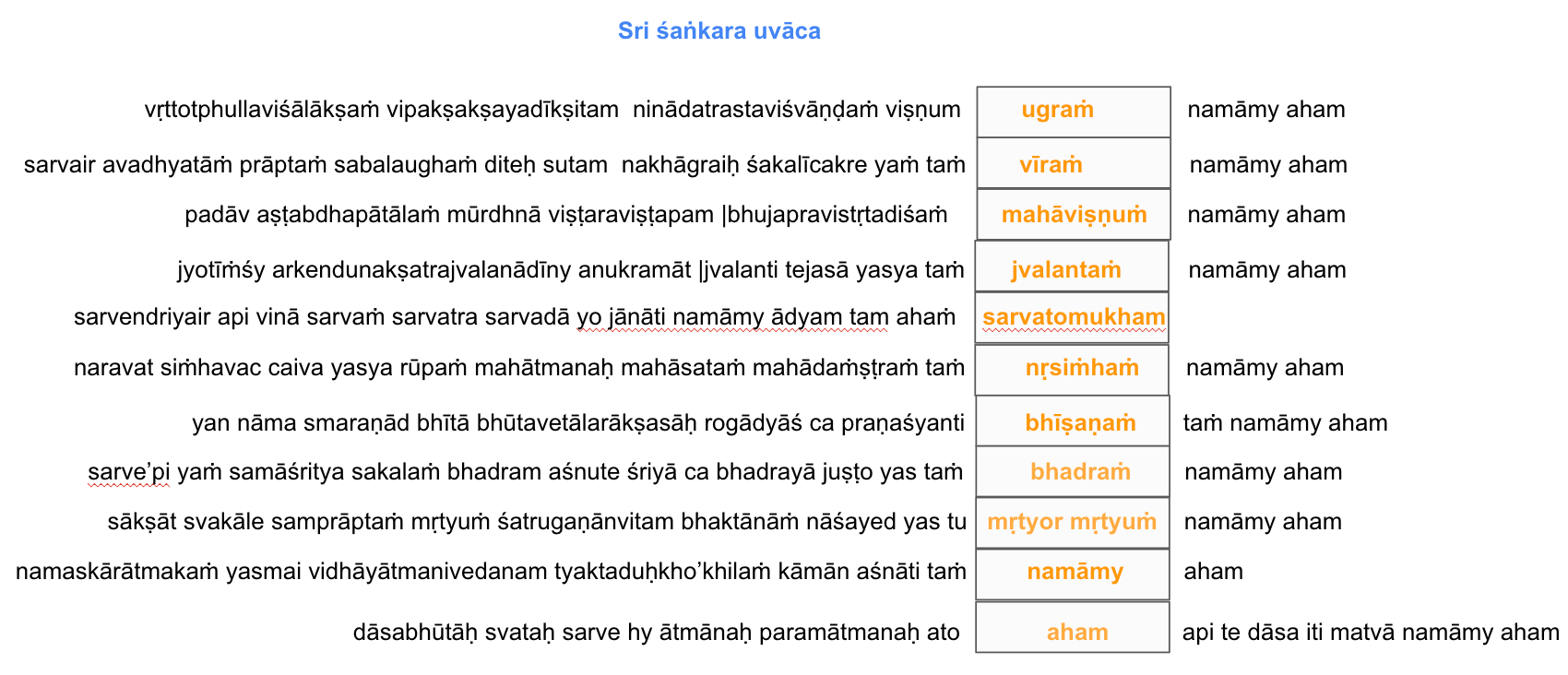
Mantranam paramam mantram, Guhyanam guhyameva ca —> “Mahamantra of all mantras, secret of al secrets”
Recited by Shankar Bhagvan himself (Direct proof)

Hear a most beautiful recital by Swamiji Lakshminarasimhachar of Mukkur
(courtesy, thanks to Swamiji and Padmavati ji for sharing for blessing of all devotees)
The trancendental Mahamantra is revevealed by reading vertical down
ugraṁ vīraṁ mahāviṣṇuṁ jvalantaṁ sarvatomukham
nṛsiṁhaṁ bhīṣaṇaṁ bhadraṁ mṛtyumṛtyuṁ namāmy aham ||
Immersion: Focus on the transcendental beauty of Lotus feet of the lord
Before we reflect on the mahamantra’s glorious meaning, and why devotees feel such awe and delight, here’s a small immersion exercise for you. Let us first concentrate on the lotus feet of Shri Narasimha and deeply enter bhakti-bhāva, while taking delight in this beautiful abhiṣheka of the Lord.
Courtesy: Many thanks to Iskcon Germany simhachalam devotees for these most beautiful prayers to Sri Narasimha ! Haribol! Jai Narahari !
With our hearts filled with joy about the spectacular beauty of Lord, lets try to understand the mahamantra and what profound meaning each word has. The twelve words, each have unique purpose and directly establish Krishna (Narasimha) (Narayana) as the supreme personality of Godhead.
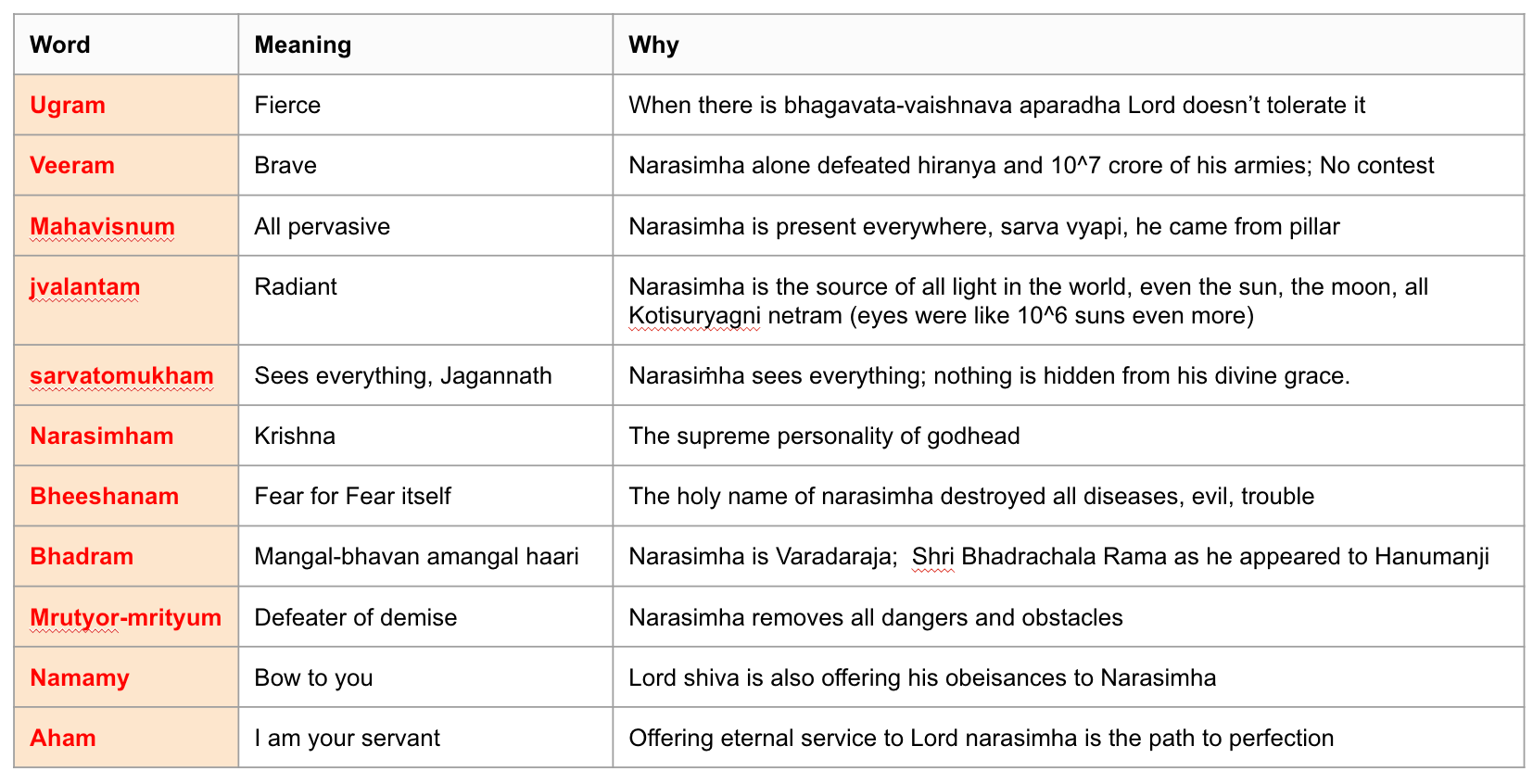
Lets see an interesting angle here
Shri Ramachandra’s narrative
Shri Ramachandra is Shantakaram, full of mercy, same time bhaktavatsala to the core. That same Lord becomes ugra the moment bhagavata-aparadha happens.
The spectacular event happens in Yuddha Kanda, as lord hanuman ji approaches Rama and offers himself as a vahana:
athaivam upasaṅgamya hanūmān vākyam abravīt || 6.59.124 ||
mama pṛṣṭhaṃ samāruhya rākṣasaṃ śāstum arhasi |
viṣṇur yathā garutmantaṃ balavantaṃ samāhitaḥ || 6.59.125 ||
He urges Rama to mount him, like Narayana on Garuda. But then Ravana strikes—so violently that even Hanuman is attacked.
At that instant, something shifts. Valmiki notes a rare rising of krodha in Rama:
Sri Valmiki says for the first time
tato rāmo mahātejā rāvaṇena kṛtavraṇam |
dṛṣṭvā plavagaśārdūlaṃ krodhasya vaśam eyivān ||
The calm ocean of mercy becomes a storm. Shri Rama becomes UGRA.
Not for himself—but for his devotee. (Just as Narasimha beacame UGRA)
tasya abhisankramya rathaṃ sa-cakraṃ sa-aśva-dhvaja-chatra-mahāpatākam |
sa-sārathiṃ sa-śani-śūla-khaḍgaṃ rāmaḥ praciccheda śarais su-puṅkhaiḥ || valmiki Ramayan 6.59.137 ||
Rama tore into pieces Ravan’s chariot, wheels, horses, standard and canopy including the charioteer and the darts and swords. He tore ravans bown, shattered his crown, his kavaca armour, everything.. Ravan was pleading for stop, stop
atha indra-śatruṃ tarasā jaghāna bāṇena vajrāśani-sannibhena |
bhujāntare vyūḍha-sujāta-rūpe vajreṇa meruṃ bhagavān iva indraḥ ||
And then—unexpectedly—mercy. Even in victory, Rama tells Ravana to return, to come again another day. “gaccha anujānāmi”—go, and fight again after rest.
This is not contradiction. This is divine balance: absolute protection of the devotee, and controlled fury that never loses dharma.Infact there’s more parallel: Bhadram, Mangal Bhavan Amangal hari is not only Sri Ramachandra also originally Shri Narasimha..
After the treta-yuga ends, Hanumanji who is chiranjeevi stays back to bless devotees and meditates on prabhu Shri Ram. Narasimha appears to Hanuman ji with Rama’s bow, in Namakkal and Ahobilam as “Karanja Narasimha” —one supreme lord, many forms, always appearing for protection of bhaktas and destruction of adharma.
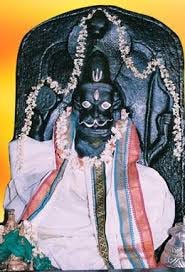
Sri Karanja Narasimha (Lord Rama’s form as shown to Hanumanji)
Lets all sing transcendental praises to supreme Lord Narasimha who is both the fiercest protector and the most compassionate shelter of His devotees.
May His divine presence awaken within the heart as we continue to chant and hear Shri Hari’s holy names.
Haribol! Jai Śrī Nṛsiṁha Deva!
Share
This article